
Research
My research asks how memories emerge and persist in early life, how sleep transforms what young children learn into stable knowledge, and how the developing brain changes the way memories are formed and retained. I am very interested in memory precision: which details of an experience young children keep, which fade, and why.
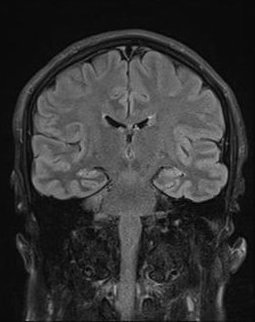
Emergence of Episodic Memory
Working with infants and toddlers, I investigate how the hippocampus and medial temporal lobe support the emergence of episodic memory. Because task-based fMRI is incredibly difficult in children too young to hold still or follow instructions, I used an approach for imaging memory during natural nighttime sleep: toddlers learn new sounds, songs, or words during the day and hear them again that night while asleep in the scanner. With this approach, we showed some of the first links between the hippocampus and memory behavior in the second and third years of life. My most recent work shows that by 18–23 months, well within the window of infantile amnesia, the hippocampus already distinguishes between the contexts in which events were experienced.
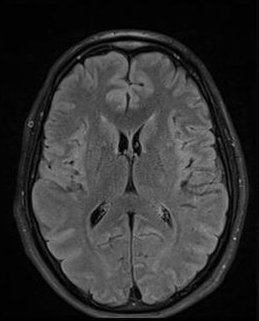
Sleep & Memory Consolidation
I combine nap and overnight polysomnography with structural MRI in preschool-aged children. I study how slow oscillations and sleep spindles work together during slow-wave sleep to stabilize new memories, and whether those benefits depend on maturation of the hippocampal subfields that keep similar memories distinct. I have found that slow oscillation–spindle coupling is associated with hippocampal subfield volumes and with overnight gains in memory precision. I also coordinate investigations on the effectiveness of targeted memory reactivation, a technique thought to manipulate sleep’s consolidation effects, in young children.
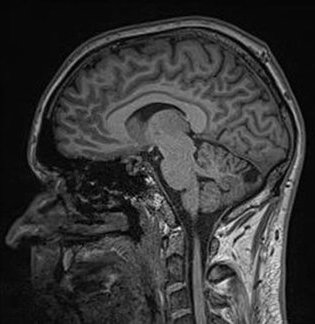
Atypical Memory Development
I study how memory development can diverge from typical trajectories, particularly in autism. In middle childhood, autistic children show altered memory for where items appeared but preserved memory for their color, suggesting that differences lie specifically in binding items to their spatial context rather than in episodic memory as a whole. I am interested in when these differences first emerge and what they reveal about how episodic memory is built in typical development.